
Products · Chapter 02
Not a better tire.
A new kind entirely.
A new kind entirely.
Every SMART product shares one breakthrough: a superelastic material that carries load the way air does - without the air. One platform, engineered for every wheel that moves.
The product difference
The flat is the easy part.
We kept everything else air gave you.
We kept everything else air gave you.
Every previous airless tire traded air for bulk — dense polymer and foam that run heavy, ride harsh, and waste energy with every rotation. They solved the flat and broke everything else.
SMART starts from the material, not the mold. A nickel-titanium structure flexes like rubber, recovers like memory metal, and returns energy like air — so nothing is compromised to remove the one thing that fails.
SMART starts from the material, not the mold. A nickel-titanium structure flexes like rubber, recovers like memory metal, and returns energy like air — so nothing is compromised to remove the one thing that fails.
Foam / polymer airless
Heavy · harsh · low energy return
SMART superelastic
Light · compliant · springs back
Pneumatic tire
Great ride · until it goes flat
SMART superelastic
The ride of air · nothing to lose
Flagship
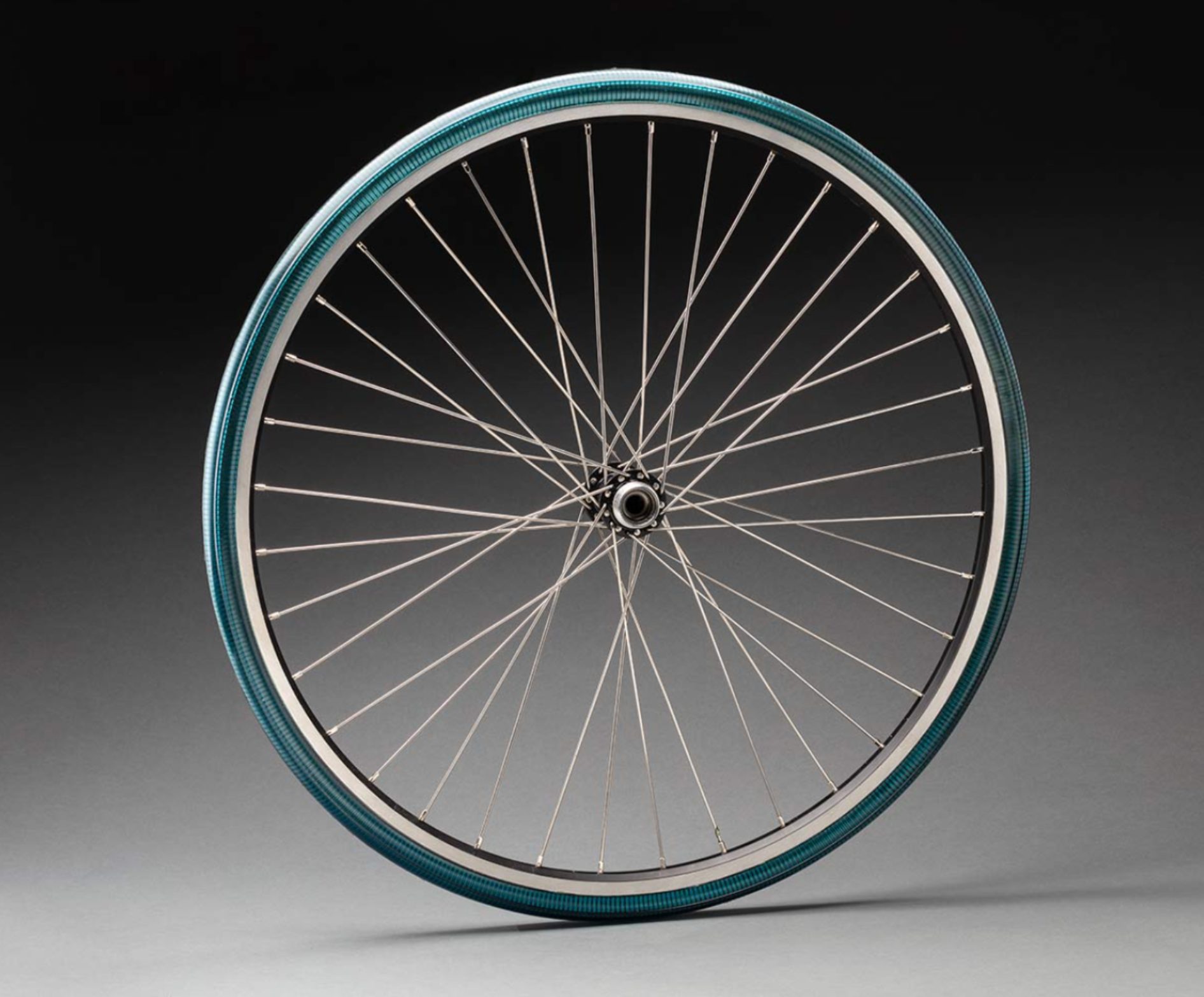
METL™
The airless bicycle tire.
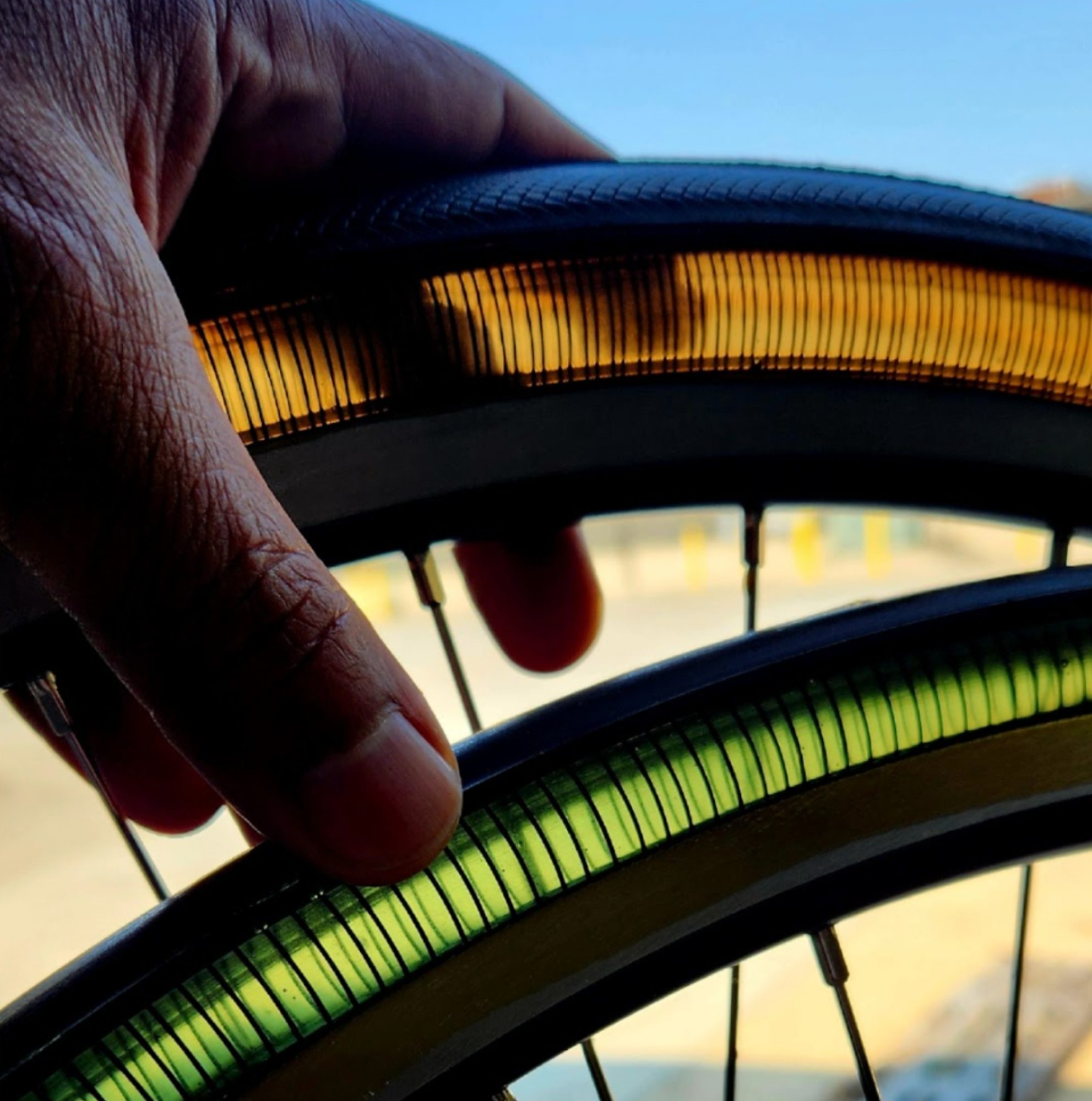
Our first product to reach riders — built on the same shape memory alloy NASA trusts off-world. It never needs a pump, never goes flat, and when the tread wears, you retread it instead of replacing the whole tire.
Never goes flatNO AIR
Retreadable, not disposableRENEW
A fraction of the rubberSUSTAINABLE
Built to be seen · finishes
Gold
Silver
Metallic blue
Alien
TIME · Best Inventions
Two-Time CES Innovation Awards
Join the waitlist →
Available to order in 2027 · buy outright or subscribe
See it ride
Not a render.
A ride.
A ride.
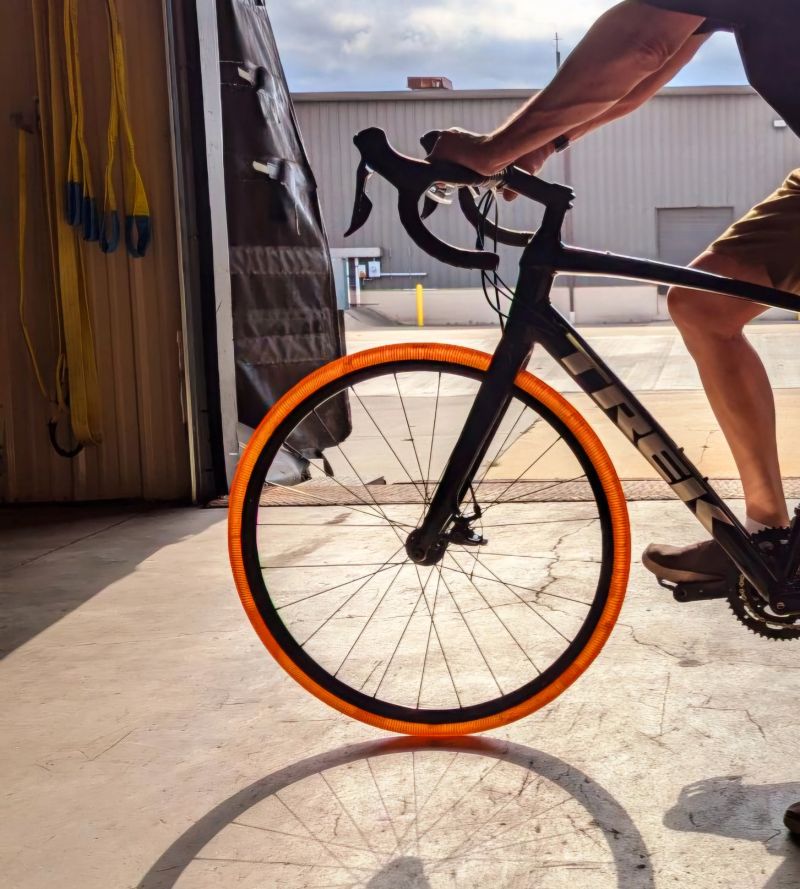
The METL airless tire on a real bike, on real ground — no pump, no pressure, nothing to go flat. Ridden and tested by hosts from CNBC, BBC and Veritasium.
METL airless bicycle tire · on the road
Airless scooter tire · in action
As seen on
CBS · ABC · CNBC · BBC · TF1 · Antena 3 · Veritasium
De-risked with industry
Not pilots on paper. Paid programs with the operators who lose the most to costly tire failures.
Aerospace, automotive, and mobility leaders have put SMART's technology through paid engagements — validating it from the launch pad to the bike lane.

The lineup
One breakthrough, engineered for every wheel.
We start where a flat is most costly and expand outward - each tire's geometry and structure engineered for the wheel size, load, and vehicle it's built for.
01
Micromobility
Shared bikes and scooters that never deflate and rarely need service.
02
Commercial fleets
High-utilization vehicles where a single hour of downtime is expensive.
03
Automotive
A long-life, no-spare, low-maintenance tire for passenger and electric vehicles.
04
Aerospace
Mobility for terrain and missions where a flat is not survivable.
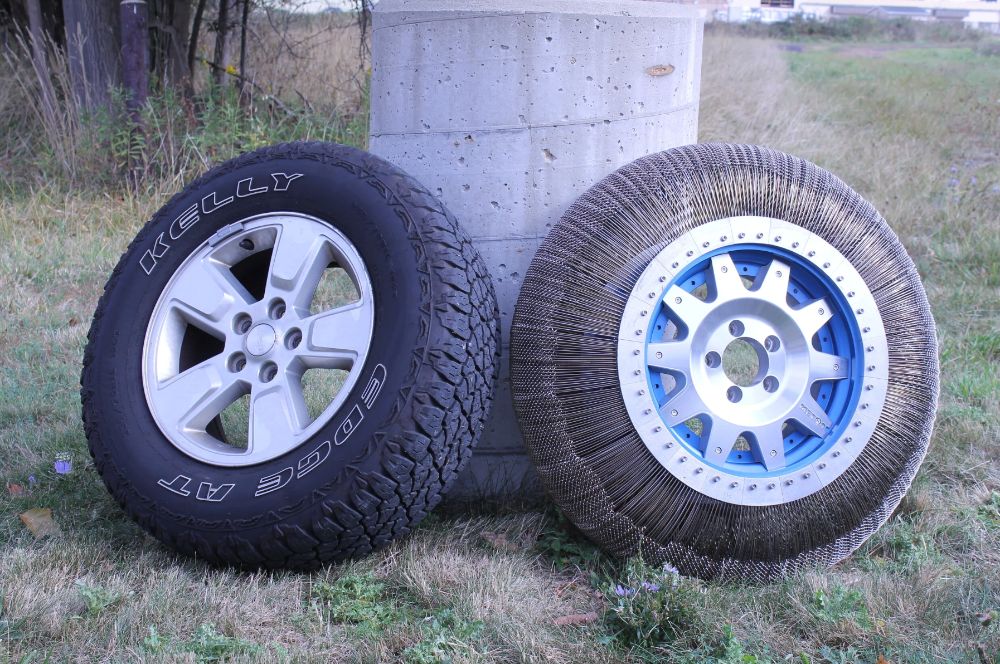
01 · Automotive prototype · bare structure
Before the tread goes on.
A full-size superelastic shape memory alloy (SMA) vehicle tire, before its tread is added. The conventional all-terrain tire on the left can still go flat or blow out, and depends on air pressure and regular maintenance. The SMART tire has no air to lose.
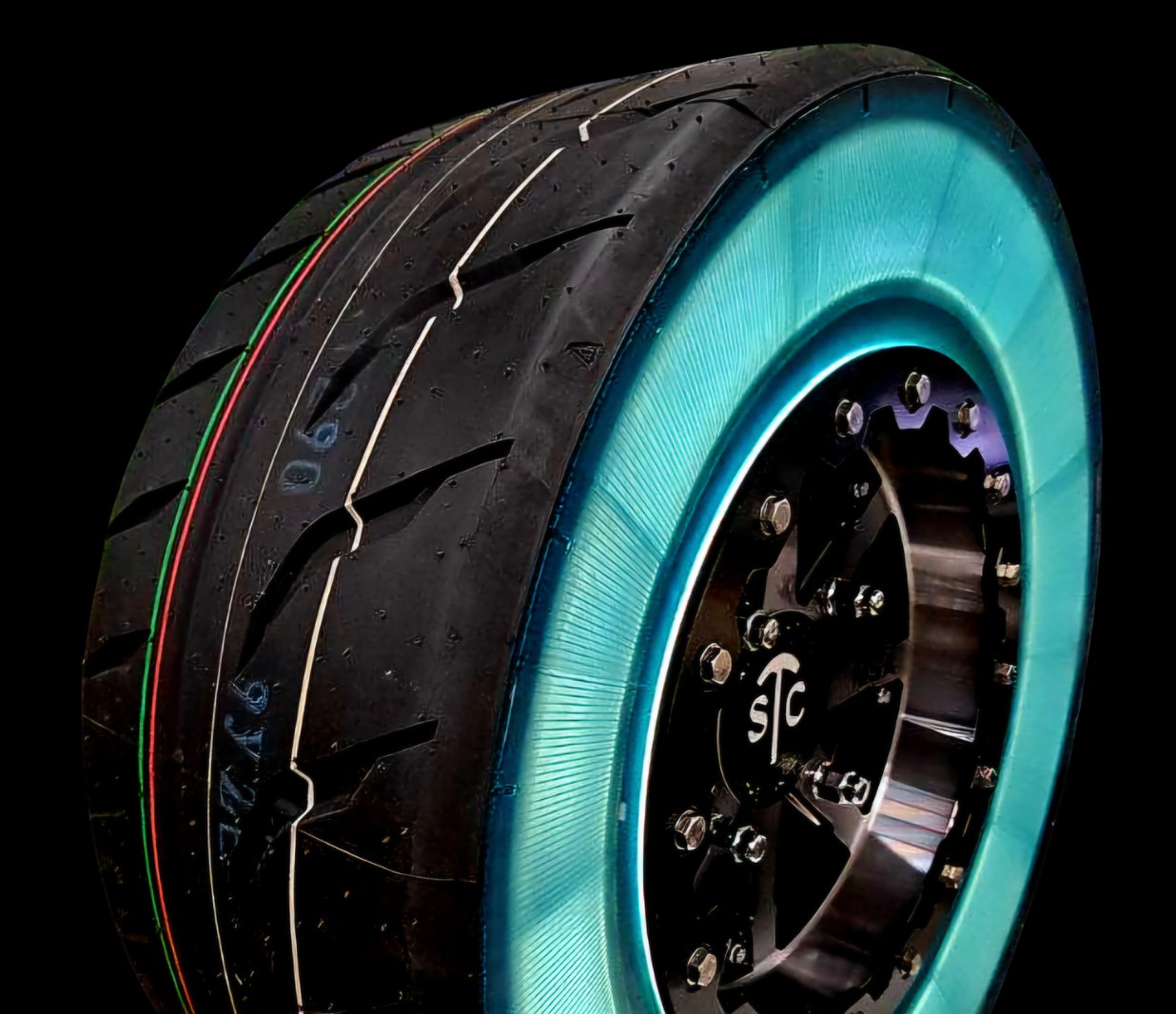
02 · Automotive concept tire · racing tread
Nothing to blow out at speed.
A concept vehicle tire — racing tread over a glow-in-the-dark superelastic structure. All the grip, none of the puncture risk, and no blowout to fear at speed.
Beyond the tire
The tire is the beginning. The platform is the point.
Our patented structure does what compressed air does today — carries load, absorbs shock, recovers its shape — without anything that can leak, puncture or burst.


Beyond Air™.
A better tire ecosystem
One tire. Many lives.
A conventional tire is thrown away when its tread wears out. A SMART tire isn't. The structure lasts; when the tread wears, you retread it at a local bike or scooter shop in minutes. Less rubber, less waste, and a cleaner footprint for the roads it runs on.
Retreading a worn tire by hand · in seconds
Questions? FAQs Availability, pricing, ride, retreading, and what comes next. +
For riders
When can I get METL? +
METL will be available to order in 2027, and you can buy it outright or subscribe. It launches as complete wheel sets, with retrofit tires for existing wheels to follow. More than 20,000 riders are already on the waitlist, and waitlist members hear first when ordering opens.
Why isn’t this already on the market? +
METL is in final testing. It has taken longer than planned because it is the first consumer product to use Nitinol as a load-bearing structure: there was no factory or supply chain to borrow, so we built the manufacturing process from scratch, more than doubling performance in key metrics along the way. Bike and scooter units are now being torture-tested to thousands of miles at maximum load. We won’t ship until they’re ready, and Kickstarter backers will be first to receive them.
How much will it cost? +
METL is a premium product, priced in line with a high-performance racing tire, with a subscription option for a lower monthly entry point. Exact pricing will be announced before ordering opens. Over its life it costs less to own: no tubes, sealant or flat repairs, and you replace only the tread.
Will it fit my bike? +
METL starts as complete wheel sets, so it arrives ready to mount. Retrofit tires for wheels you already own will follow. Supported sizes and bike types will be published before ordering opens, and waitlist members get them first.
Does it really never go flat? +
Yes. There is no air inside to lose. The load is carried by the superelastic structure, not by pressure, so a nail or thorn through the tread can’t deflate it.
Does it ride like a normal tire? +
That is what sets it apart. Earlier airless tires used solid foam or polymer and rode harsh. Our first prototype was built to match a 700c road tire at 100 PSI; ridden back to back with an air-filled tire, riders couldn’t tell the difference. Every generation since has been refined from rider feedback, and hosts from CNBC, BBC and Veritasium have ridden and tested it.
Is it safe? +
The tire is firmly fastened to the rim and can’t lose pressure, so there are no sudden flats or blowouts and it is very unlikely to fold in a corner. Nitinol resists corrosion and fatigue, which is why it is trusted in medical stents that flex with every heartbeat. Read the science of Nitinol →
Isn’t a metal tire heavy? +
No. METL weighs about the same as a comparable air-filled tire. The structure is mostly open space, engineered the way NASA designs when every gram counts, and uses about half the rubber of a conventional tire. You also leave behind the tube, pump and spare.
What happens when the tread wears out? +
The tread wears like any tire’s, but instead of throwing the tire away you replace just the inexpensive tread and keep the core structure, which is built to last through many treads. Replacement treads will be sold through local bike and scooter shops, so renewing a tire takes minutes.
What does METL stand for? +
Martensitic Elastic Tubular Lattice. “Martensitic” refers to martensite, the crystal form Nitinol shifts into under load; when the load comes off, it returns to austenite and the tire springs back to shape. “Elastic” is the result: large deformation, fully recovered. “Tubular lattice” describes the coiled Nitinol structure inside every METL tire.
The bigger picture
Why start with bicycles? +
Bicycles put the technology into people’s hands fastest and build the manufacturing, supply chain and real-world data that larger tires depend on. We studied markets from scooters and trucking to agriculture, defense and aerospace; cycling came first, and everything we learn with METL carries forward.
When will SMART tires be on cars and trucks? +
In order: shared bikes and scooters first, then commercial fleets, then passenger and electric vehicles. Each step builds the data and certification the next one needs. Automotive prototypes are in development with leading automakers, and we will share milestones as we reach them.
Is the technology proven? +
The material and structure were developed over years at NASA’s Glenn Research Center, tested on rovers, cars and bicycles, and are protected by granted patents in multiple countries. Aerospace, automotive and shared-mobility leaders have tested it through paid programs. METL was named one of TIME’s Best Inventions and won two CES Innovation Awards.
Where are SMART tires made? +
In the USA, with manufacturing in California and Mississippi. Our design and engineering are based in Los Angeles.
How can I invest in SMART Tire? +
See the Investors page for the current round and how to take part.
For riders
Be first on METL™.
Join the waitlist and ride the first airless tire built on Mars-grade material. Available to order in 2027 — buy outright or subscribe.
Join the waitlist →
20,000+ riders already on the waitlist
For businesses
Pilot airless on your platform.
For fleets, OEMs, and operators ready to put a tire that never goes flat to work.
Partner with us →
For retailers
Join the retread program.
Bike, scooter, and repair shops: fit and sell replacement treads as retail rolls out — a new recurring service, with no graveyard of dead tires to manage.
Become a retail partner →
Dream it. Build it. Ride it.
Next · Markets
Where one material reshapes every market.

Beyond Air™.
Recognition
LA Times Studios Defense & Aerospace Visionaries 2026
Named one of TIME's Best Inventions
Two-time CES Innovation Awards
Named one of TIME's Best Inventions
Two-time CES Innovation Awards
Los Angeles Headquarters
12615 Crenshaw Blvd
Hawthorne, CA 90250
Hawthorne, CA 90250
hello@smarttire.com
invest@smarttire.com
media@smarttire.com
Media kit ↓
invest@smarttire.com
media@smarttire.com
Where LA aerospace meets deep tech
THE SMART TIRE COMPANY, INC. © 2026·Privacy